
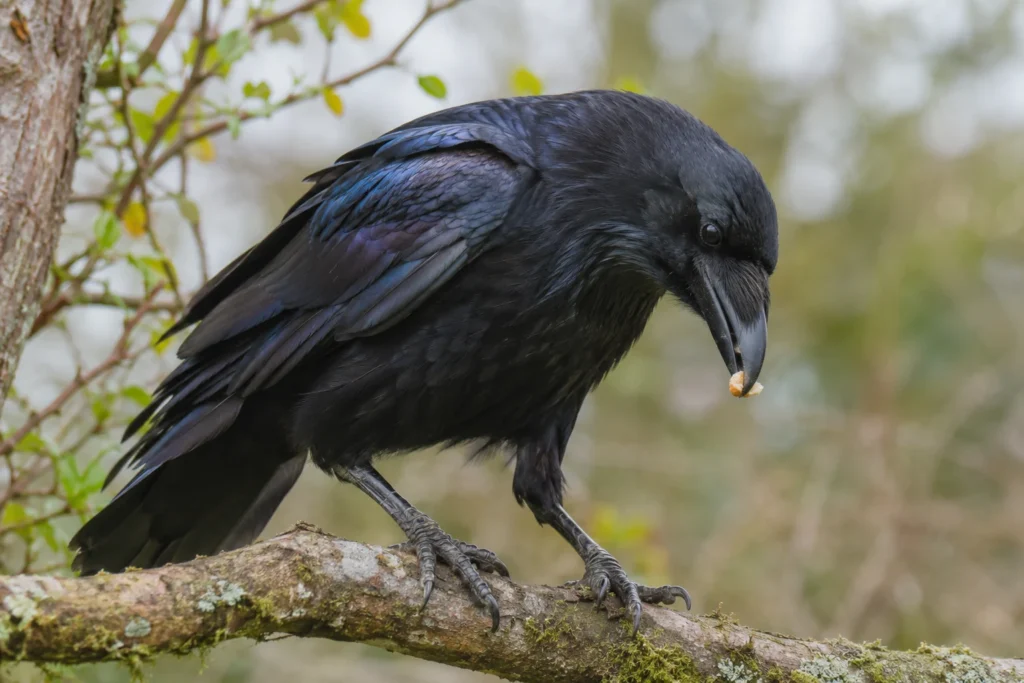
The raven landed on a branch with a piece of meat held firmly in his beak. It was a good perch and a promising meal.
Below him, a fox stopped walking.
The fox could not reach the branch. He could, however, reach the raven’s opinion of himself.
“What magnificent feathers,” he began. Their deep black colour, he explained, showed unusual wisdom. The raven’s care for his family proved his goodness. His powerful voice must surely announce his courage.
The raven listened very carefully. It was pleasant to hear an expert recognise one’s qualities.
The fox went further. A bird with so many virtues deserved to be called a king.
The price of saying thank you
That settled it. The raven could hardly allow such a generous speech to pass without a response.
He opened his beak to thank the fox.
The meat fell.
The fox caught it before the raven had finished feeling pleased. A moment later, the meal was gone.
His admiration, it turned out, had been considerably less filling than the raven’s supper.
Before leaving, the fox offered one final piece of advice: when praise arrives for no obvious reason, it is worth asking what the speaker hopes to get.
The raven remained on the branch. His feathers were still black, his voice was still powerful, and he was now a little better informed about the fox.
He was also hungry.
About this retelling: Retells the Chinese version of the fox-and-raven fable in chapter XIII. Wilhelm’s note relates it to Aesop; this is not presented as exclusively Chinese in origin. The long learned comparisons are condensed. Based on chapter XIII of The Chinese Fairy Book (1921), edited by Richard Wilhelm and translated by Frederick H. Martens. This is one recorded version, retold here in new wording.
Another story?
Try Why the dog stopped trusting the cat, or meet the characters in The traveller with the ancient tortoise.
Sources
- Project Gutenberg · public-domain 1921 edition: XIII THE FOX AND THE RAVEN — The Chinese Fairy Book (1921), Richard Wilhelm / Frederick H. Martens