
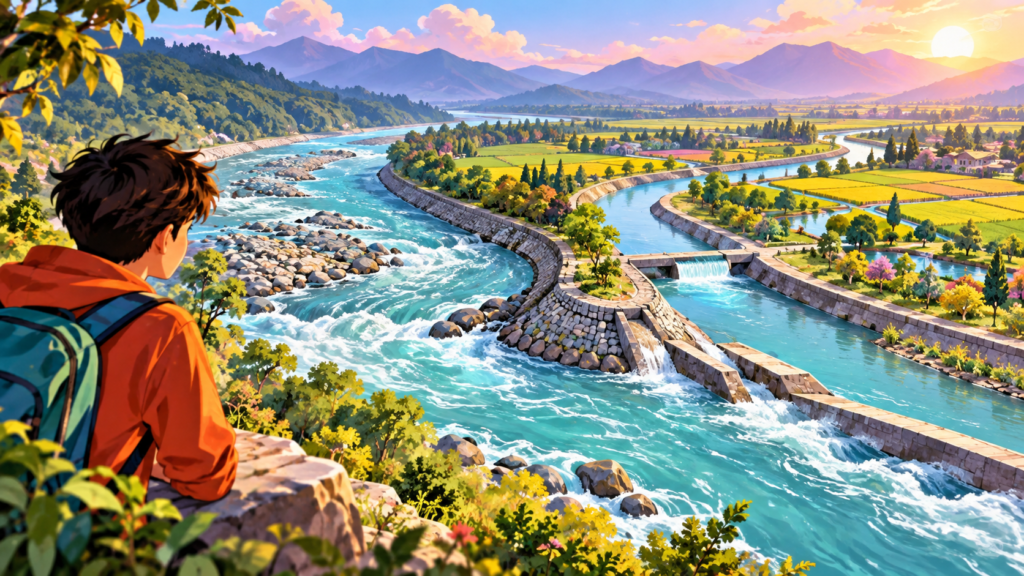
When a river causes trouble, the obvious solution may seem to be putting a wall in its way. The Dujiangyan irrigation system in Sichuan took another approach: directing and dividing the water so it could be used while managing flooding and sediment.
UNESCO says construction began in the third century BCE. The system has been modified many times since, which is one reason it still works. Calling it a completely untouched ancient machine would be less impressive than the real story of people maintaining and adapting it.
Water has more than one job
The Minjiang River brought water that farmland needed, but also material carried downstream and the risk of destructive flow. Dujiangyan’s components address those problems together. A channel that brings water to fields is useful only if it does not also bring an impossible amount of sediment or floodwater.
The design uses the landscape as part of the solution. That does not make it effortless. It means builders had to understand how the river behaved before they tried to change its route.
Follow the arrows, not just the name
Begin with the arriving river. The design has to decide where water goes, how much is sent towards farmland and what happens to material carried with it. These are related questions, but answering one doesn’t automatically answer the others.
UNESCO identifies three main parts of the headworks: a bypass dike, a floodgate and a diversion passage. Their names make more sense as jobs within a system than as three independent monuments. Additional embankments and channels complete the arrangement.
Imagine a diagram that showed only one arrow towards the fields. It would explain irrigation but leave out the problems that could make irrigation fail. Where does excess flow go? How is sediment handled? A better diagram would have to include those routes too.
The system’s history supplies another set of arrows, this time through centuries. UNESCO records modifications and enlargement under several dynasties. Those changes are part of its survival as infrastructure, rather than evidence that the original idea has somehow been spoiled.
We can recognise the difference in an ordinary school building. Keeping it useful may mean maintaining old walls while changing particular rooms or equipment. The comparison isn’t about equal age or purpose; it separates continuing use from leaving every component untouched.
Dujiangyan is unusually interesting because its historical design still belongs to a practical task. People need the water to arrive in useful ways. Admiring the age of the works doesn’t remove the need to maintain them or understand how conditions affect them.
That is why the river belongs at the centre of the story. A stone structure could remain after its purpose had disappeared. Here, movement is the purpose. The most revealing picture would show water passing through the system, with enough arrows to explain where it goes next.
An old idea that keeps moving
The most surprising word in UNESCO’s description may be “still”. The system is not merely a set of ruins to look at. It remains part of water management on the Chengdu plain.
If you were drawing a diagram, you would need arrows rather than a single monument. Water enters, separates and travels. That makes Dujiangyan a story you can follow, not just a date you have to remember.
Two other water histories explore a canal and evidence of an earlier system: Why was a canal bigger than a shortcut? and The dams behind Liangzhu’s ancient city.
Sources
- UNESCO World Heritage Centre: Mount Qingcheng and the Dujiangyan Irrigation System