
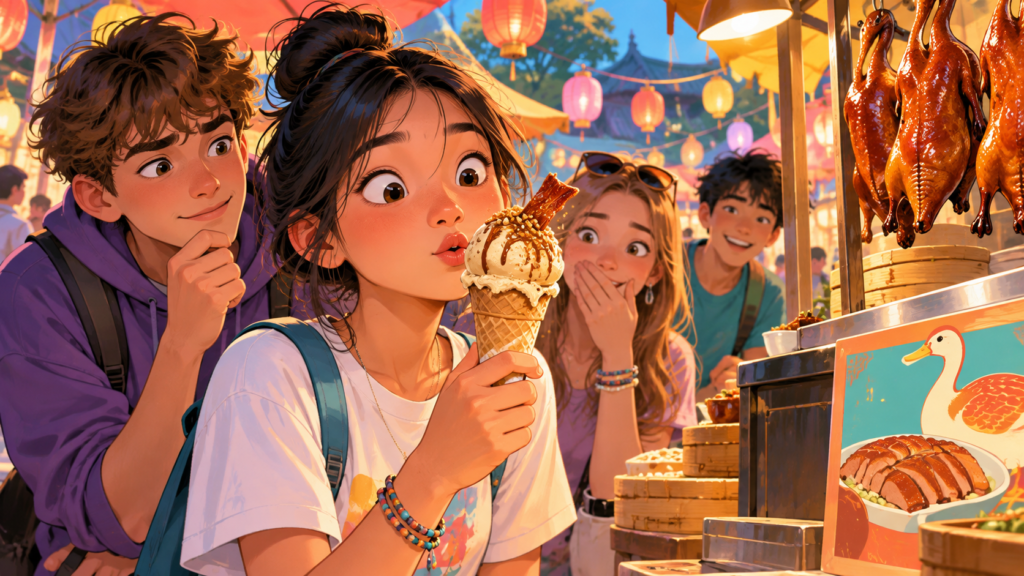
You might expect roast duck on a plate and ice cream in a cone. A Beijing summer market put the ideas together, offering roast-duck-flavoured ice cream among its special products. The name makes you pause before you have seen a scoop.
The city’s 2026 listing described several playful products from established local food brands: a sesame-paste soda and a slush based on douzhi, a fermented drink, appeared alongside the ice cream. These were event-specific creations, not a claim about what everybody in Beijing eats every day.
The familiar part of an unfamiliar combination
The products appeared at the Qianmen Food Gala’s Mint Soda Carnival in July 2026. The city account described a market bringing established brands together with new versions of familiar flavours. The experiment was therefore connected with foods people could already recognise.
Changing the format creates a useful puzzle. A food has a flavour, but also a temperature, texture and usual place in a meal. Turn one element into a frozen dessert and the other elements may no longer fit the way you expect.
The name of the product supplies a promise before the first spoonful. You start comparing it with something you know, even though the listing cannot tell us exactly how the ice cream tasted. It would be dishonest to write a tasting note from an announcement alone.
Sesame-paste soda makes a similar invitation to imagine a change, this time in a drink. A familiar flavour is paired with a form that could alter the experience. The appeal may lie partly in trying to work out how much of the original remains recognisable.
The event offered small portions, according to the city listing. That suits the idea of browsing different creations rather than treating every new flavour as a full meal. It still leaves room for someone to prefer an ordinary choice. Enjoying an experiment does not require enjoying every result.
There is a difference between laughing with a playful food idea and laughing at the people connected with it. The first response takes the design seriously enough to ask what it is trying to do. The second closes the conversation before it starts.
If you were inventing your own version, you would need to choose which qualities mattered most. Would the name refer to an ingredient, a recognisable flavour or simply an idea? That question gives the joke some substance. A surprising label gets attention; the food still has to offer an experience worth having.
Would you take a bite?
The best way to discuss an unusual flavour is not to call it disgusting before tasting it. You might love it, dislike it or decide the idea was more interesting than the spoonful. People put savoury and sweet tastes together in many places; the fun here is how a familiar local flavour changes when it turns cold.
There is a design challenge hiding in the menu. How much of the original taste should a new product keep? If it tastes exactly like dinner, perhaps it stops feeling like dessert. If it tastes nothing like the name, the joke wears thin.
The city listing announced a short July 2026 carnival, so you should not expect the same stalls to be there later. But you can play the flavour game anywhere: name one food you know well, then imagine a version that sounds impossible. Would you try it if somebody made it carefully?
Food curiosity can start with a market stall or with the words on a menu: What would you eat at a Beijing night market? and Can a menu word tell you how food was cooked?.
Sources
- Beijing Municipal Government: Mint Soda Carnival