
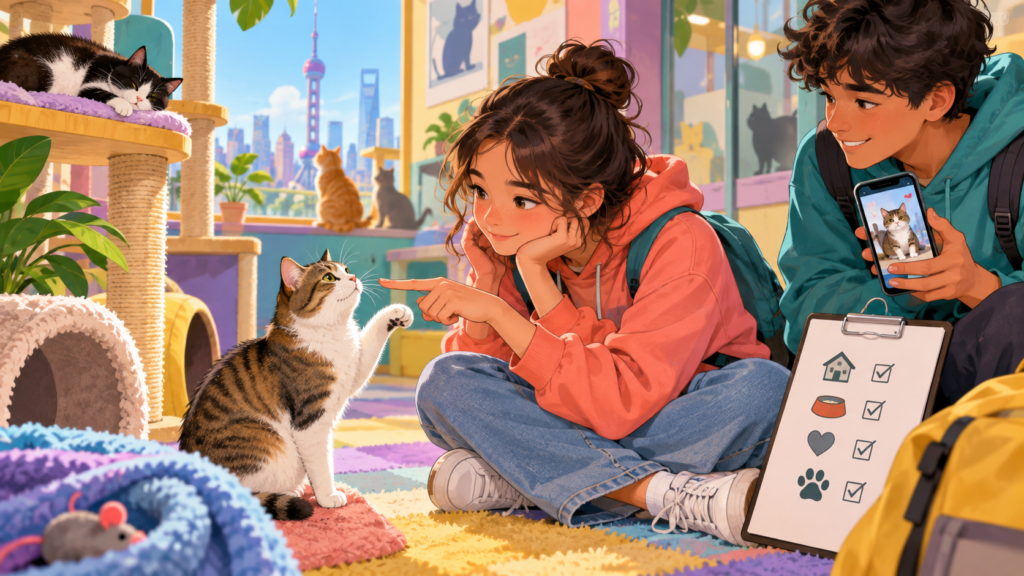
A photograph can make anyone want a cat in about three seconds. Living with one lasts rather longer. That is why an adoption space among Shanghai’s cat-themed attractions is more interesting than it first appears: it changes the question from “which one is cutest?” to “could we actually care for this animal?”
The city government’s 2026 guide brings together exhibitions, art and places to meet rescue cats. These are different experiences. A museum visit ends when you leave; adopting an animal means food, veterinary care, patience and a home that works for the cat as well as for you.
A home isn’t a photo opportunity
The Shanghai guide describes Cat Island as a place combining rescue care, education, adoption and volunteering. Those activities make the animals more than attractions. Meeting a cat is one moment within a much longer process of caring for it.
Cats Protection’s advice helps explain the practical difference. The charity stresses that cats have individual personalities and that a household’s routine matters when choosing a suitable companion. A timid animal may struggle in a busy setting even when everyone in the family means well.
The charity also recommends letting a new cat have space and approach people in its own time. That reverses the instinct to make every meeting exciting. A quieter interaction can give the animal more choice.
For a family considering adoption, there is work to do before choosing a name. Who will look after daily routines? Where can the cat rest undisturbed? What happens when the household is away? A plan has to cover days when nobody feels like filming a cheerful pet video.
Those questions don’t take the pleasure out of the idea. They give the pleasure a chance to last. A cat that suits one household won’t necessarily suit another, so listening to carers who know the animal is more useful than comparing photographs.
There are also ways to value a rescue space without adopting immediately. The Shanghai venue includes public education and volunteer activities; any participation would need to follow its own arrangements. Learning about the work can be worthwhile on its own.
The decision is therefore less like picking a souvenir and more like changing a shared home. The people need to agree, and the animal needs room in the plan. Cuteness can begin the conversation, but it can’t do the planning for you.
The difficult part of the cute story
Rescue animals may be shy. Some may need a quieter home or more time to settle than a quick visit suggests. A responsible decision involves asking the people who know the animal, checking that everyone at home agrees and being ready for ordinary days, not just the first exciting one.
If you are under eighteen, it is also a family decision. That may sound less glamorous than an adorable video, but it is fairer to the cat. Admiring an animal without taking it home can be the right choice too.
The Shanghai guide cannot tell us what happened to every animal or whether an individual adoption is suitable. It does show something worth noticing: a city can make room for both the fun of cats and a conversation about their care. The best photo might be the one you do not take because you are busy listening to that conversation.
Other animal stories ask what a display shows and what everyday care involves: Can a cat exhibition teach you science? and Why would a panda keeper make a toy?.
Sources
- Shanghai Municipal Government: Explore cat-themed exhibitions and experiences across Shanghai
- Cats Protection: Cats and children: matching a cat to a household and allowing space