
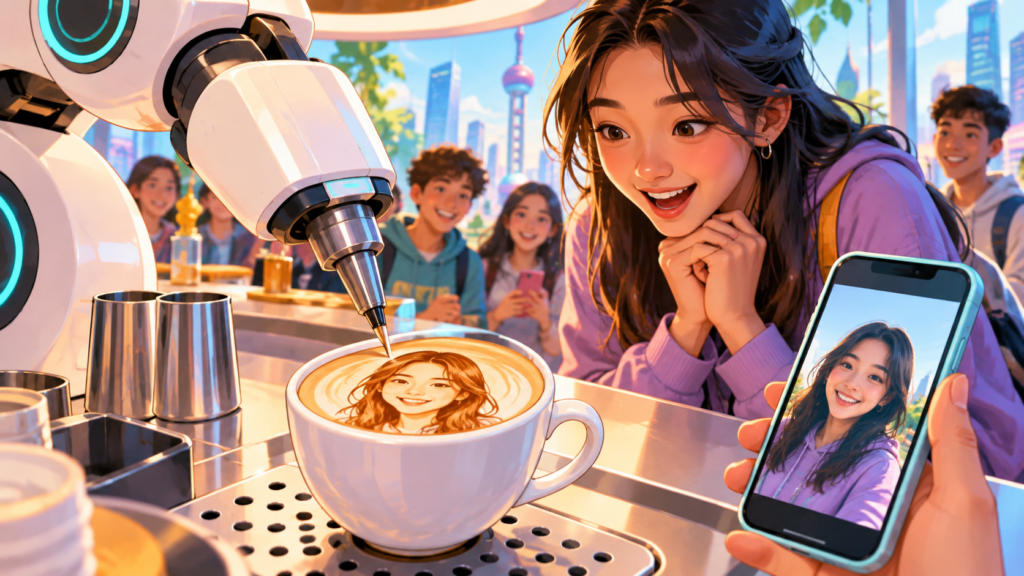
You do not need to like coffee to wonder how a machine could draw a picture on one. At a Shanghai robotics visit in April 2026, a robot made personalised latte art, according to the city’s account. A visitor held up a cup with a photograph reproduced on the drink’s surface.
It is a brilliant party trick. It also invites a question: is the interesting part the drink, the image or the machine that placed it there?
A picture that will disappear
Latte art is temporary. Drink the coffee and the design is gone. In this demonstration, a photograph was printed onto the drink. That is different from the free-poured patterns a barista might make with milk, although both put an image on something soon to be drunk.
Shanghai’s 2026 AI events also included a planned robot coffee stop in an old neighbourhood building. Those are particular demonstrations and venues. They are not evidence that ordinary cafés across the country have replaced people with robots.
The picture belongs to somebody
One visitor chose a photograph of herself with her father because it was his birthday. The city’s account makes that choice more interesting than a generic demonstration image. The robot supplied a process, but the visitor supplied the reason for using this particular photograph.
That gives the cup a short personal story. Another customer could choose a pet, a drawing or a shared memory, if the system allowed it. The resulting images would differ not just in appearance but in what they meant to the people holding them.
We shouldn’t confuse this with a claim that the machine understands those memories. Reproducing an image and knowing why a birthday matters are different things. A successful print can serve a human purpose without the printer sharing that purpose.
The temporary surface adds another twist. A photograph in a frame is meant to last; this one belongs to a drink. The customer can take a photograph of it, creating a lasting record of an image designed to disappear.
There are practical questions behind the pleasant moment. What sort of image can the system accept? How does the finished picture differ from the original? What happens to an uploaded file afterwards? The visit report doesn’t answer all of these, so they remain questions for the people running it.
The later city-walk programme proposed robot coffee in a historic neighbourhood setting. That juxtaposition is appealing, but a programme announcement is evidence of a plan, not confirmation that every advertised stop happened exactly as described.
The April visit gives us a firmer, smaller example. Someone chose a family image and received it on a cup. The technology mattered because it carried a choice from one surface to another. The human connection was already there before the coffee was made.
Would you photograph it first?
Perhaps, even if taking a photo before every drink can get silly. A face or design on a cup makes you pause. Then comes a separate question about whether the drink itself tastes good.
This is a more useful technology story than the vague claim that “AI changes everything”. It changes one tiny, visible thing: what appears on the top of a cup. That gives us something real to look at and a reason to ask what the person behind the counter still does better.
Compare two other settings where robots meet everyday customers: Who cooks at a robot canteen? and Would you buy a snack from a robot?.
Sources
- Shanghai Municipal Government: Intl delegates inspired by Shanghai robotics innovation, human connection
- Shanghai Municipal Government: WAIC City Walk to bring AI experiences across Shanghai