
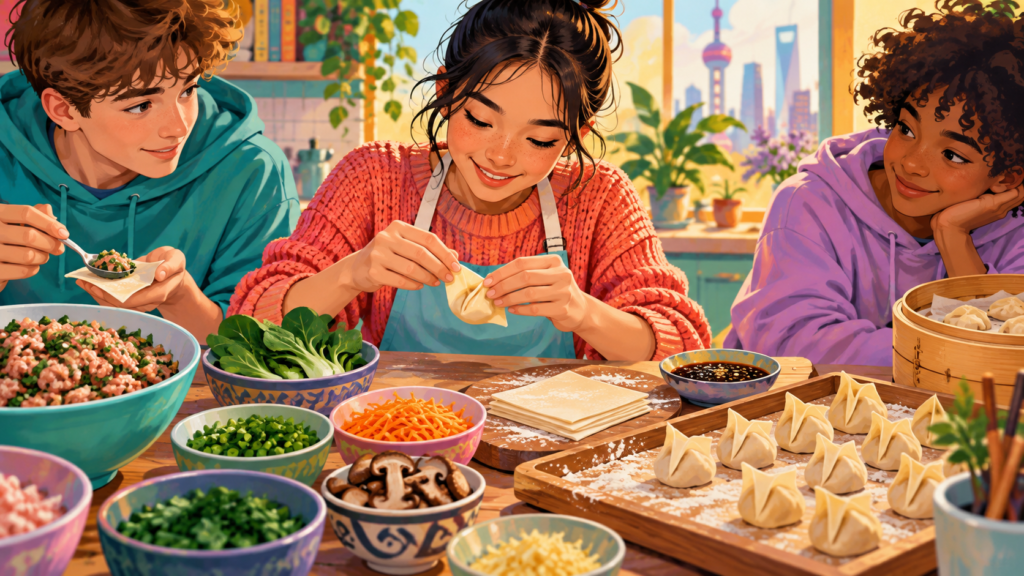
If someone gives you a little square of dough and says “make dinner”, the possibilities are surprisingly wide. Fold in a filling, pinch the corners and suddenly you have a wonton. In Shanghai, one familiar version combines pork and vegetables, but even that label leaves plenty of room for variation.
A 2026 Shanghai food guide describes wrappers with different textures, fillings that include greens such as shepherd’s purse, and bowls finished with a mixture of broth and toppings. It also tells the story of mobile vendors who carried their equipment on a pole and sold hot wontons as an affordable late-night meal.
A tiny parcel, many choices
One cook might want more greens; another might focus on the broth. The wrapper needs to be strong enough to hold together, but tender enough to enjoy. Even the way it is folded can make a difference to how it feels in a spoon.
The city’s guide explicitly says there is no single Shanghai family recipe. That is a relief. Two bowls can belong to the same local tradition without looking or tasting exactly alike.
Don’t forget the part around the parcel
The broth can be easy to overlook because the wonton gives the dish its name. Shanghai’s guide describes a clear soup made with ingredients such as pork bones, chicken bones or ham. Scallions, strips of egg and seaweed are among the additions it identifies. The liquid and the small extras help make the bowl, rather than merely surrounding the filling.
The wrapper has choices of its own. Some of the guide’s shop examples use darker or whole-wheat wrappers, while others emphasise the pork and greens inside. A different wrapper can change what the diner notices before they reach the filling. We shouldn’t assume that a photograph of one pale parcel represents every version.
The mobile vendors offer another way to picture the meal. The guide describes carrying-pole stands equipped with a small stove, bowls, utensils and seasonings. The seller needed a compact way to carry both the food and the things required to serve it hot. A bowl that seems simple depended on a carefully arranged portable workplace.
That account is part of the city’s food history, not a promise that the same stand will be waiting on a particular street tonight. It helps explain why the story extends beyond a list of ingredients. The place and manner of eating can matter alongside what goes into the parcel.
If you were comparing two bowls, you could ask three separate questions: what does the wrapper feel like, what is the filling, and what surrounds it? That gives you a better description than saying only that one was “nice”.
You might discover that the broth was your favourite part, or that a particular balance of greens and pork made the difference. Those preferences belong to the person eating. They don’t need to become a rule about which household has made the correct wonton.
What would your version taste like?
The easiest mistake when writing about food is to make one dish stand in for everybody’s meals. A bowl of wontons tells us something smaller and more interesting: how a place adapts a familiar idea, and how households and shops keep changing it.
Start by asking what is inside before asking whether a wonton is “Chinese”. The answer could lead to a person, a neighbourhood and a story about why that filling became their favourite. A little parcel can carry quite a lot.
For two further questions about noodles and dumplings, continue here: Can noodles get their bounce from bamboo? and How do you eat soup inside a dumpling?.
Sources
- Shanghai Municipal Government: Pork and vegetable wontons