
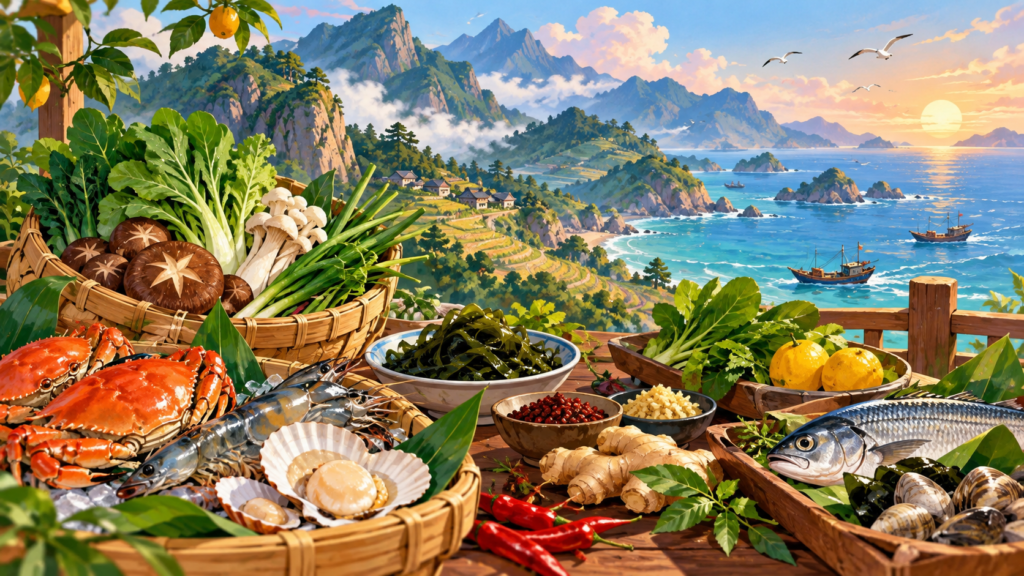
Look at a map of Chaozhou before looking at a menu. UNESCO describes the city as lying between mountains and sea, with local food resources including fish, rice, tea and olives. It identifies Chaozhou as a city of gastronomy, with a distinctive food culture rather than a sample menu for all of China.
Start with a named preparation
Chaozhou beef meatballs are a useful example because the city’s food programme does more than place them in a flattering photograph. A May 2021 notice describes standards covering their ingredients, technical requirements and testing. It dates the standards’ introduction to 30 March and the accompanying logo to 1 May that year.
That record tells us something about how a local food name is maintained. Producers and testers need a shared description of what qualifies, rather than relying only on a customer recognising an attractive bowl. The short notice does not supply the full specification, so it cannot tell us the exact ingredient proportions or justify a made-up recipe.
It also complicates the map. Beef meatballs belong to the city’s food identity without being a direct illustration of fish coming from the nearby coast. A local cuisine includes preparations and skills alongside the resources grown or caught around it.
Tea supplies another named practice. UNESCO’s profile identifies Chaozhou Gongfu tea, connecting the local food story with the preparation and sharing of a drink. Leaves and a finished cup are different stages; the people working between them help make the regional association meaningful.
These are concrete starting points rather than a compulsory menu. A city’s identity can include beef meatballs and tea while leaving every household free to cook something else tonight.
Geography provides ingredients, not a finished recipe
Fish, rice, tea and olives make a varied starting list. UNESCO’s description of Chaozhou brings those resources together with its coastal and mountain setting. Before discussing a dish, it helps to recognise that different landscapes can supply different parts of a meal.
That does not make geography a simple instruction book. Having an ingredient nearby does not tell you how a cook will prepare it, what it will cost or whether it will appear on a particular table. A map shows possibilities; farming, fishing, trade and household decisions help turn them into food.
Tea offers a useful example of the distinction. The profile names Chaozhou Gongfu tea as part of the city’s heritage. Producing tea and preparing it for somebody to drink are related activities, but they involve different skills. A landscape can supply leaves while a person shapes the experience of sharing them.
The same care applies when reading a menu. A restaurant might choose dishes that express a local identity, offer popular favourites or adapt to its customers. Its selection is an account of that kitchen, not a complete inventory of everything eaten across Chaozhou.
Trade extends the story beyond the immediate landscape. A local food culture can make use of ingredients brought from elsewhere. Calling a dish local need not mean that every component grew within walking distance; it can also describe how people in a place have learned to prepare and recognise it.
Season and occasion add further differences. The food served at a festival may not represent an ordinary weekday meal. A celebratory menu and a quick lunch can both belong to the same city without looking alike. Asking when and for whom something is made gets you closer to an actual food story.
For a useful comparison, choose one named dish from a real menu and investigate its ingredients individually. Which are linked with the surrounding environment, and which arrive through trade? Keep a question open if the menu does not tell you. The point is to connect food with evidence, not to invent an appealing journey for each ingredient.
Chaozhou’s setting gives the investigation a direction. The most interesting answer will still come from a particular preparation, where geography meets the choices of the person doing the cooking.
The map gives Chaozhou’s food a setting. A named preparation takes you further, towards the people who make it and the choices that keep it recognisable. Geography begins the conversation; a beef meatball or a cup of tea gives it something specific to talk about.
Explore next
Sources
- UNESCO Creative Cities Network: Chaozhou profile
- Chaozhou City of Gastronomy: Chaozhou beef-meatball standards and logo, 10 May 2021