
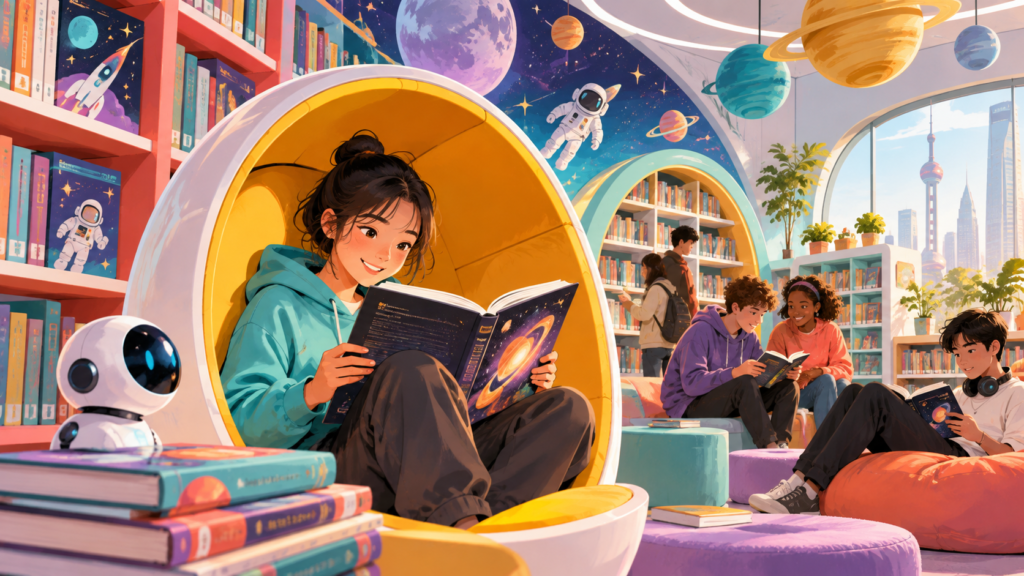
A library does not need a spaceship on the roof to feel like a good place to imagine another world. In Shanghai’s Hongkou district, a child-friendly reading space was designed around a science-fiction theme, with colourful shelves and books for younger readers. The city described it in a 2026 guide to new local reading places.
The guide counted more than 4,000 books in that one space. The number sounds impressive, but the seat where somebody can open one without being hurried may matter more.
The room can make a difference
Some people enjoy a silent, serious library. Others need a place that feels less like an exam hall. A theme can invite someone through the door, although the books and the staff have to give them a reason to stay.
Shanghai’s guide also describes reading places with tree-shaped shelves, drama workshops and areas divided by age. These are separate neighbourhood projects, not a claim that every library in China looks like a playground. The variety is the point: one room will not suit every reader.
A room has several ways in
The Hongkou space’s collection includes picture books and popular science. Its bright design and child-sized seating belong to a room aimed at younger readers of different ages. A science-fiction theme doesn’t mean every book has to be a novel about space travel.
The other projects make the variety easier to see. At North Bund, tree-shaped shelves and house-shaped displays bring familiar outlines into the room. In another library, areas are arranged for different age groups. These are different answers to the question of how a reader finds a place.
A younger child may need to reach a book and sit comfortably with an adult. A teenager might value somewhere to read without feeling they have been put into a toddler’s corner. The guide describes teenage areas in some of the spaces, rather than suggesting one design solves both needs.
Activities give people another route towards books. The guide mentions drama workshops, storytelling and hands-on creative sessions. A reader could encounter a story through a performance before deciding to read it, or follow a workshop with a book about the same subject.
Those are possibilities, not measurements of what every visitor does. To understand the room’s effect, you would need to hear from readers and look at how the space is used after the opening photographs have been taken.
Try designing a corner for yourself. Would you put the chair near a window, leave room for a bag or want a table for notes? Small choices can determine whether a room feels usable, even when they don’t produce a spectacular image.
The sci-fi idea is one invitation among several. A welcoming library has to make room for somebody who likes the theme and somebody who just wants a book. The best part may turn out to be a small detail the designer never expected anyone to photograph.
Which book belongs there?
For a sci-fi shelf, look for a story that asks a question rather than only showing off gadgets. What would happen if a friend remembered a day you did not? Could a city be designed for another species? A colourful room can start the mood, but the book must do the imagining.
We do not know how teenagers actually use that Hongkou space from a promotional guide alone. The next question is which books teenagers borrow and whether the theme matters after the first visit. A good library belongs to its readers more than to its designer.
These two reading places offer very different histories of keeping books close: Could a city wall have a reading corner? and What was hidden in the Library Cave?.
Sources
- Shanghai Municipal Government: Literary Shanghai: New reading spaces for young readers