
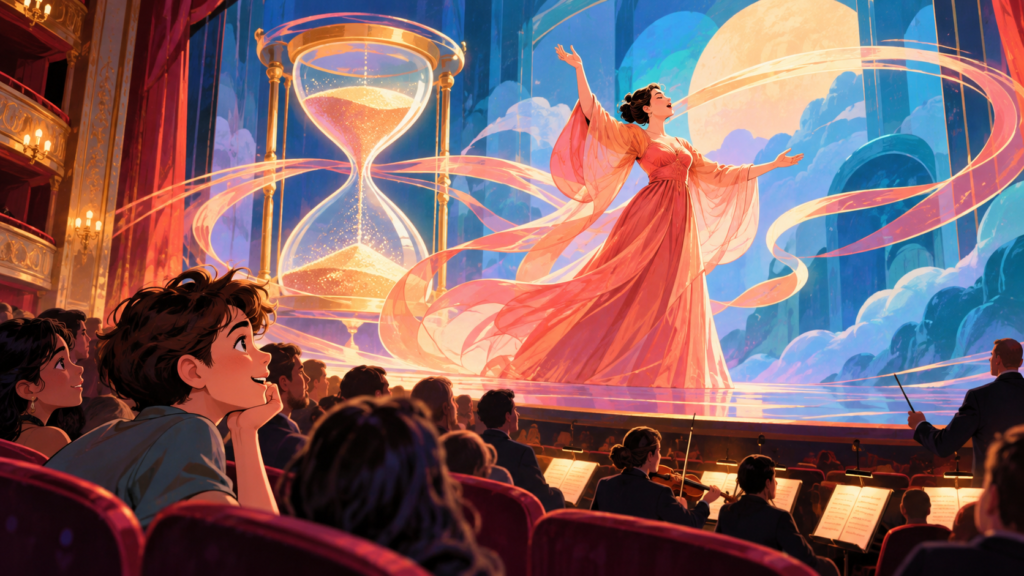
Some stories can be summarised in a sentence. On stage, they may need far longer. In Kunqu, a theatrical tradition with roots around Kunshan, singing, movement, spoken text, costume and music work together. The point is not to rush from plot point to plot point.
UNESCO recognises Kunqu as intangible cultural heritage. That does not mean all Chinese theatre sounds or looks like it. A single form can be rich without standing in for an entire country’s stages.
The music is doing something
UNESCO’s description identifies bamboo flute and percussion instruments among the accompaniment. Their sounds punctuate action and emotion. Music is therefore part of how a scene is shaped, rather than a background track placed behind an otherwise complete story.
A performer can sing, speak and use gesture within that structure. Those modes give an audience different kinds of information. The plot may describe an event briefly, while performance develops how the event is encountered and felt.
This helps explain the difference between reading a synopsis and watching a scene. The synopsis tells you what happens. It cannot reproduce every change in sound, movement or emphasis through which the scene unfolds.
Kunqu developed around Kunshan during the Ming period. UNESCO names established works including The Peony Pavilion. A specific tradition and repertory provide a better context than the loose label “Chinese opera”, which can hide differences among forms.
Symbolic gestures are part of that tradition, but a new viewer should not have to guess their precise meaning unaided. A programme note, subtitle or explanation can make a particular movement more legible. Understanding grows from connecting the visible action with its context.
Try watching a short, clearly identified excerpt twice. On the first viewing, follow the explanation of the scene. On the second, attend to one feature: a gesture, a change in accompaniment or the relationship between voice and movement. This is a way of organising your attention, not a test you have to pass.
The performance may still contain unfamiliar choices. That is normal when meeting any theatrical form for the first time. Familiarity with a film’s editing conventions can feel automatic only because you have already encountered them many times. A different stage vocabulary can become easier to read through repeated, informed watching.
The time taken by a scene then becomes less empty. You begin noticing activity within it, rather than waiting only for the next plot event. Song, movement and accompaniment can all advance what is happening without making the storyline move faster. The pleasure lies partly in learning to recognise that work as it occurs.
What happens between events?
Think of a film scene that lingers on a face after the action has stopped. You learn something from the pause. In performance, gesture and sound can make time feel similarly full.
You do not have to understand every lyric to start watching carefully. What changes when the performer moves? What does the music tell you to notice? These are better first questions than “When does something happen?” Sometimes what happens is that we finally pay attention.
Explore next
- How many people move one shadow?
- Can one instrument sound like a whisper?
- A goldfish takes the stage
Sources
- UNESCO Intangible Cultural Heritage: Kun Qu Opera