
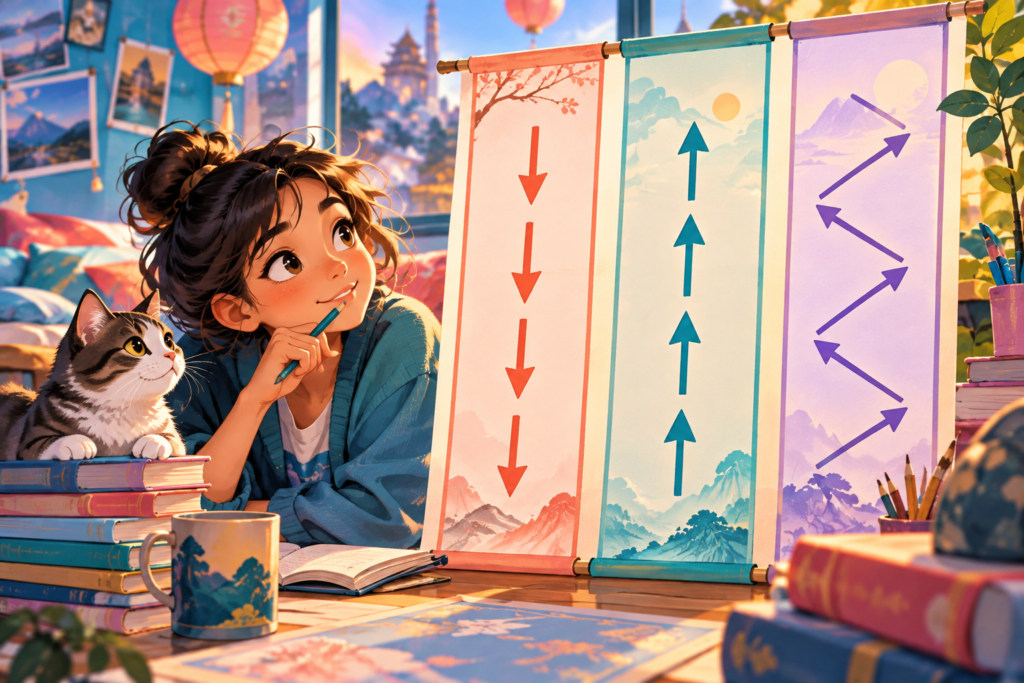
Some Chinese text is set in vertical columns. Characters run from top to bottom, and the columns generally progress from right to left. If you begin at the left edge because that is what an English book taught you, the page will seem to be hiding its beginning.
Follow the next character
The first task is to find the start of the text, then follow its order. In a conventional vertical Chinese layout, that means moving down a column before moving to the column on its left. The letters and words in a horizontal English page have trained your eyes to expect another route.
A page can therefore contain readable characters and still be difficult if you misunderstand its arrangement. Meaning depends on sequence, and sequence is partly communicated by design.
W3C’s Chinese layout requirements discuss both vertical and horizontal composition. They also explain why punctuation needs adjustments for the direction of the text. A designer is arranging a writing system, not rotating a finished picture and hoping it still works.
That difference is especially visible when a page contains more than one kind of text. A title, a note and a block of running text need relationships that the reader can understand. The order should guide you without forcing you to guess which part follows which.
Try a small practice layout with numbered boxes rather than unfamiliar words. Arrange one column from top to bottom, then put the next column to its left. Following the numbers makes the route clear before you have to think about vocabulary.
Now compare that with a horizontal version of the same sequence. The content can remain in the same order while the physical route changes. This shows why direction is part of how a page is read rather than part of what the individual sentence means.
Do not use character form as a shortcut to predict every layout. The W3C account discusses regional practices and different kinds of publication; vertical and horizontal text can appear in more than one setting. A page should be examined on its own terms.
This is also a useful habit when meeting other unfamiliar layouts, from comics to older books. Find the clues that establish reading order, and ask for help when they are unclear. Difficulty with the route does not mean the text is deliberately mysterious.
Once your eye learns where to go, the page becomes less surprising. You can begin attending to the words and the rhythm of the design instead of repeatedly looking for the beginning. Understanding the layout removes one obstacle to enjoying what the writer has to say.
Turn the habits, not the book
Punctuation and line layout also need attention. Digital standards discuss how marks sit and how characters are oriented, because a vertical page is not simply a horizontal page rotated like a photograph.
Try drawing a comic with panels that start in the opposite corner from where your friends expect. They might still understand each drawing, but the story order would change. Layout tells readers where to go next.
There is no need to pretend all Chinese books use one direction. The useful lesson is that reading direction is a design choice with its own history, and you can learn to notice it.
Explore next
- Can a book open like a dragon?
- Could you print a book with wooden letters?
- Is every Chinese character a picture?