
A cinema ticket is an unimpressive object until you remember what happened after you bought it. Perhaps the film surprised you, the person beside you laughed at the wrong moment, or the ending became the subject of an argument on the way home. The little piece of paper connects an ordinary evening to something much larger.
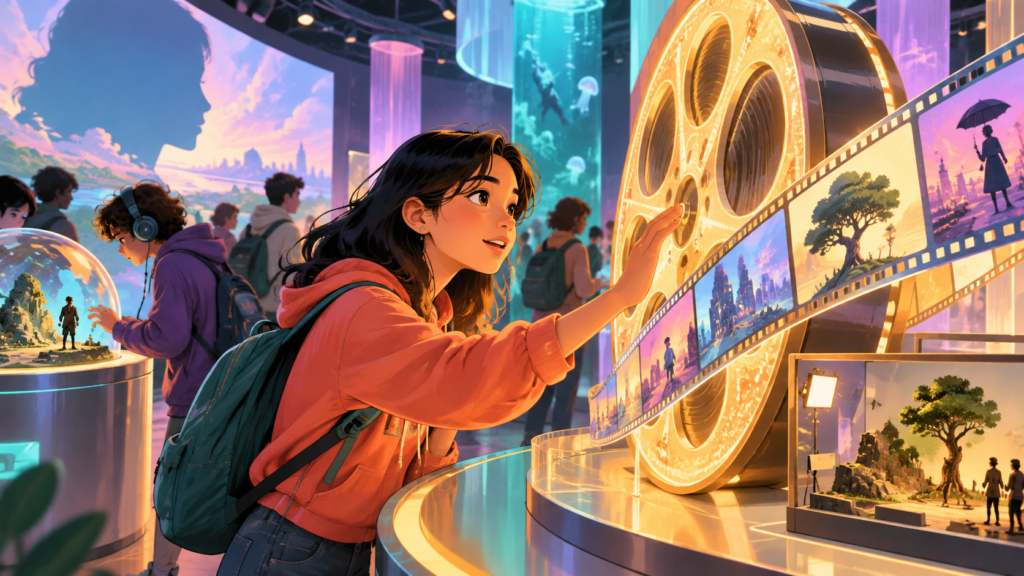
An exhibition at the Shanghai Film Art Center in 2026 made room for that side of film history. Alongside original manuscripts, stills and other memorabilia, it included ticket stubs and spaces for screenings and discussion. Its subject was the history of the Shanghai International Film Festival, so the audience belonged in the story alongside filmmakers.
Behind the photograph
The city government’s report described four acts covering pioneers, the industry, fans and work behind the scenes. That arrangement changes how you might approach a glamorous festival photograph. The people standing in front of the cameras are one part of it; the exhibition asks what else made the occasion possible.
A manuscript offers a different kind of evidence from a still. The still fixes one visible moment, while a manuscript can let you examine something written before the finished result. Neither object tells an entire story alone. Their interest comes partly from putting different kinds of record beside one another.
The report counted more than 500 historical documents and objects. That does not mean a visitor had to memorise hundreds of dates. A small object can provide a way into a much bigger collection, especially when its purpose is familiar. You might know almost nothing about a festival’s early years and still understand the excitement attached to a treasured ticket.
It is also worth separating an original object from a recreated experience. An authentic ticket records an actual occasion. A replica red carpet helps visitors imagine a part of festival life, but it is not evidence that they attended the original event. Both can be useful, provided you know which you are looking at.
Taking your place in the story
The exhibition included interactive artwork and areas where visitors could watch and talk. That offers a different pace from moving along a row of display cases. A discussion can make you return to an object you walked past, while a screening gives context to an image that seemed unremarkable on its own.
Participation does not have to mean touching fragile material. It might mean comparing records, responding to an installation or listening to someone else’s reading of a scene. The useful interaction is the one that makes the story clearer, rather than simply supplying a button to press.
For a young film fan, that approach leaves several possible routes through the subject. You could follow how a film reaches an audience, examine how a festival remembers itself, or concentrate on the things ordinary viewers chose to keep. There is no need to begin by recognising every famous face.
The programme described in the May report ran until 20 July 2026, so it should be understood as a past exhibition rather than a current invitation. Its idea remains appealing: cinema history is not stored only in the films. Sometimes it is also in a ticket someone could not quite bring themselves to throw away.
For more about the places where films are made, explore these two Qingdao stories: What does Qingdao’s film city need besides cameras? and Inside Qingdao’s underwater film studio.
Sources
- Shanghai Municipal Government: Shanghai International Film & TV Festival special exhibition opens