Language & Meaning
Why might an address start with the biggest place?
A postal address can guide your eye from a wide area down to a particular door.
Read the storyA closer look at language, places and everyday life in China.
A postal address can guide your eye from a wide area down to a particular door.
Read the storyA character can keep its digital identity while the font changes its visible strokes.
Read the storyA carved seal can turn writing into a small, personal piece of art.
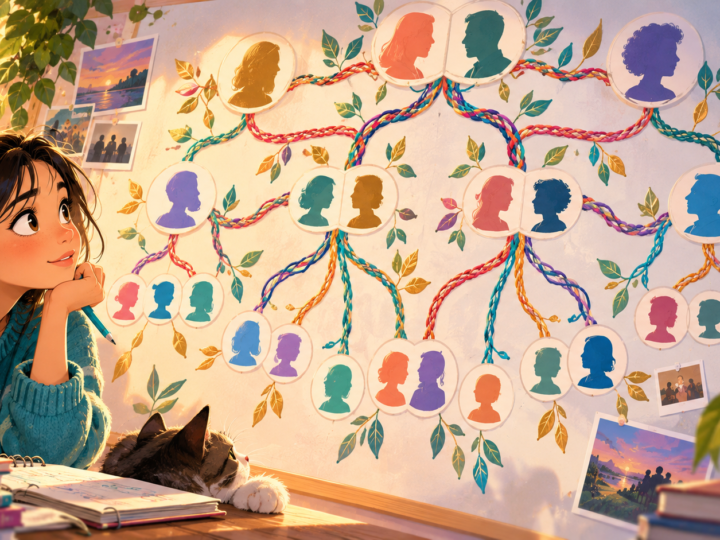
Read the storyEnglish gives a big family group one convenient word. Other languages can mark relationships that “cousin” leaves hidden.
Read the storyIn Mandarin, “three books” needs a little more than a number and a noun. The extra word is a clue to how things are grouped.
Read the storyThe digits are the same, but Mandarin gives a big number different stepping stones.
Read the storyA date that starts with the year can look backwards to a British reader. Turn it into a set of boxes and the order suddenly makes sense.
Read the storyThat small circle at the end of a Chinese sentence is doing a familiar job. Its shape tells a story about how writing fits on a page.
Read the storyAn English verb changes for yesterday or for “she”. Mandarin often keeps the verb's form and uses other clues to show time and meaning.
Read the storyChinese text can look like a continuous row of characters to an English reader. Readers still recognise words; the spaces simply work differently.
Read the storySome characters began as pictures, but treating every modern character as a drawing makes reading harder, not easier.
Read the storyA Chinese keyboard does not need a key for every character. Typing can begin with how a word sounds.
Read the storyThere’s more to read.
A story you haven’t marked as read yet, chosen just for a little change of pace.
Surprise me